
How to Destroy a Downtown Business District
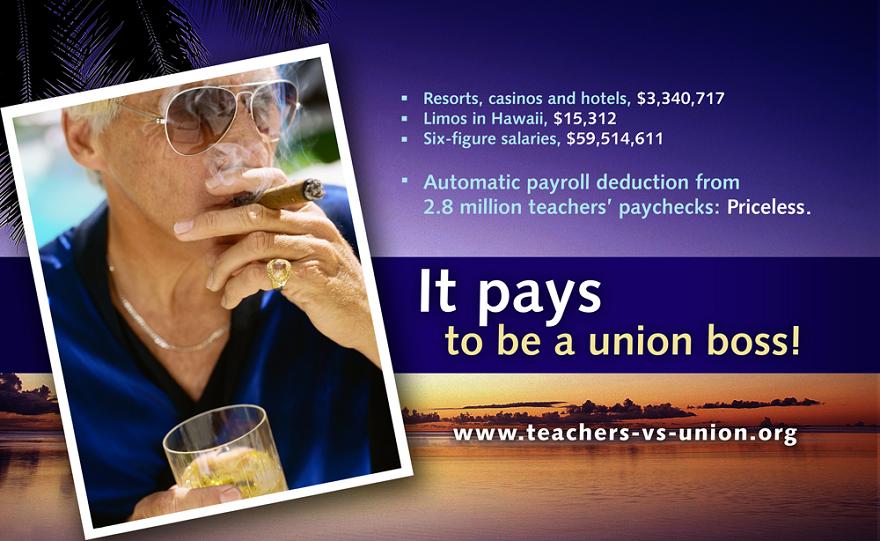
In a previous post Griffiti Tags and the Decline of Neighborhoods it was pointed out that a city that does not pay attention to petty crimes such as graffiti tagging will invite "more vandalism and more serious crime because it sends the message that the city doesn't care and isn't paying attention." Today I would like to cover the role of Unions in the destruction of downtown urban business districts.
I live in Bayonne, a mostly Democratic town, in one of the most corrupt counties in one of the most corrupt states in the country. Living in a city filled with Democrats means that Unions get to dictate how things are built in the city.
Take for example the problems that Robert Healey ran into with Democrats when he wanted to build a large project in Cherry Hill without union labor:
APP.com, 7 Jun 2004, Contractor: Pay up, or pay the price
A self-made multimillionaire, co-owner of the Viking Yacht Co. and son of a former labor union leader, the gruff, tough-talking Healey wanted to rebuild a crumbling apartment complex in Cherry Hill.
He said he had opted not to use union labor on the private $46 million job because it would have cost him an additional $7.3 million.
That's when the trouble with Democrats in the township and Camden County started, he said.
Money talks, Healey figured. Healey said he thought he could avoid political trouble from South Jersey Democrats and steer clear of labor problems if he paid between $500,000 to $1 million extra to hire contractors favored by local unions.
Healey, 75, said he made the offer in a job-site construction trailer on May 28, 2003, to Donald Norcross, co-chairman of the Camden County Democratic Party and president of the 89,000-member Southern New Jersey Central Labor Council.
...
Healey said that union contractors didn't want up to $1 million extra to rebuild the abandoned 434-unit Cherry Hill Apartments on Route 38. They wanted the whole $7 million to pay for union labor, said Healey, who co-founded the luxury Viking Yacht building business in Bass River in 1964.Healey said after he refused to use the higher-priced union labor, delays from local governments started. A county sewer system tried to overcharge his business more than $1 million for service, he said.
You'd have to be a complete moron not to know that Union labor can add anywhere from 50% to 100% more for any construction job. At a time when local property taxes are shamefully, criminally, insanely too high, you would think our local politicians would be thinking of ways to lower our taxes, but you would be wrong. Bayonne's politicians are actually pushing for higher costs for school construction, commercial construction and all public development projects.
The Jersey Journal, 5 Jul 2008, Bayonne wants union labor in projects
The Bayonne City Council is taking steps to utilize union labor in public construction projects.
The council will hear an ordinance at its meeting next week that, if passed, would require union labor be used in public construction contracts and construction contracts for which a tax abatement has been granted.
That's right, stiff 80% of the area's construction workers who are non-union and hand out a gift to unions worth millions of dollars with nothing to show in return except higher costs and payoffs and corruption. What moron would vote for that?
Then when a developer wants to come into Bayonne and build a large project to help the business district, entice him with punitive labor contracts and excessive construction costs.
While the rest of America is slowly weaning itself away from unions, nationwide just 20 percent of jobs were completed by union labor, the bright bulbs in Bayonne's City Hall are looking for ways to increase Bayonne's projects to 100% union labor. The word imbecile fails to describe politicians so brain-damaged.
This is lesson 2 on how to destroy a Downtown Business District.
Related: Since 2001more than 500 union officials have been indicted on charges including fraud and embezzlement [New York Times].
I should mention that I have been appealing my tax bill for the past few years.
Philadelphia Enquirer,
29 Jun 2008, In N.J., struggling under burdenFor taxpayers, New Jersey is a land of national distinction.
Nowhere is there a higher average property-tax bill: $6,796 per household, up more than 50 percent in just the last five years.
And that, in a costly nutshell, is why New Jerseyans are some of the angriest taxpayers in America.
Among seniors, the anger is giving way to panic, Tom Yarnall warns. "Are we going to run out of money?" he asked. "Or are we going to run out of heartbeats?"
Yarnall, 76, a retired computer specialist, pays $9,053 in property tax - about one-quarter of his fixed income - on his two-story colonial on Weston Drive in Cherry Hill. That's up from $6,344 in 2002, a 43 percent jump.
Unions do not benefit this country:
The Library of Economics and Liberty, Labor Unions
Many unions have won higher wages and better working conditions for their members. In doing so, however, they have reduced the number of jobs available. That second effect is because of the basic law of demand: if unions successfully raise the price of labor, employers will purchase less of it. Thus, unions are the major anticompetitive force in labor markets. Their gains come at the expense of consumers, nonunion workers, the jobless, and owners of corporations.
The following explains why our politicians, who are Democrats, could possibly vote to have union labor cripple our city's economy:
National Review, 31 Aug 2007, The Union Party
According to the National Institute for Labor Relations Research, unions contributed $925 million to political campaigns and causes during the last presidential-election cycle. Nearly all of that money went to Democrats. On top of those nine digits, unions routinely run massive get-out-the-vote drives to help Democrats, and their officers often volunteer full time for Democratic campaigns while collecting salaries from their union jobs. In recent election cycles, unions have spent 87 to 90 percent of their money from PACs and “527” groups on Democratic candidates and causes.
In return, Democratic politicians have supported policies that benefit union leaders at the expense of union members, as well as the non-members who are forced to pay dues in many states.
On March 1, only two House Democrats voted against a union-backed measure that, in effect, would have taken away the right of workers to a secret-ballot vote on whether to unionize. This would have left them vulnerable to harassment and intimidation. Every Democratic freshman supported the measure (known as “card check”). In the end, supporters of card check could not muster the 60 votes needed for cloture in the Senate, but not a single Senate Democrat cast a “no” vote.
Labor unions have also acquired a vise grip on the Democrats when it comes to trade. Former moderates on this issue — even many Democrats whose districts host major ports and benefit from free trade — now vote against almost every new trade pact. Their putative objections concern environmental and labor standards in developing nations, but opposing free trade also has the nice consequence of keeping the AFL-CIO happy.
It's time to dis-assemble unions, not give them more money for trivial jobs.
Heritage Foundation, 1 Apr 2008, Do Americans today still need labor unions?
The premise of collective bargaining is that by representing all employees a union can negotiate a better collective contract than each worker could get through individual negotiations. But because the union negotiates collectively, the same contract covers every worker, regardless of his or her productivity or effort.
In the manufacturing economy of the 1930s, this worked reasonably well. An employee's unique talents and skills made little difference on the assembly line.
INDIVIDUAL ABILITIES
In today's knowledge economy, however, collective representation makes little sense. Machines perform most of the repetitive manufacturing tasks of yesteryear. Employers now want employees with individual insights and abilities. The fastest-growing occupations over the past quarter-century have been professional, technical, and managerial in nature. The jobs of the future include Web designers, interior decorators, and public-relations specialists, among others.
These jobs depend on the creativity and skills of individual employees. Few workers today want a one-size-fits-all contract that ignores what they individually bring to the bargaining table. Union-negotiated, seniority-based promotions and raises feel like chains to workers who want to get ahead.
...
Take General Motors, which used to pay its janitors and security workers the union rate of $75 an hour. When Toyota and Honda started selling better cars for less, they drove GM to the brink of bankruptcy and forced the United Auto Workers to agree to new contracts paying market rates. As this has happened at company after company, the difference between union and non-union wages has steadily shrunk.

