
Kleptocodia
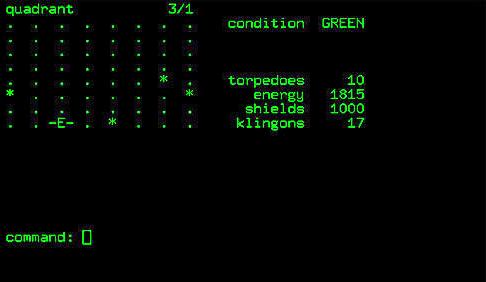
For any of my readers who don't know, poor souls afflicted with kleptocodia [yes, I made the word up] suffer from an obsessive impulse to download software they do not need nor will ever use.
Back in 1975 I bought my first computer, an IBM 5100 for $15,000 to automate my vending machine business (1). The first computer program I ever wrote was The Game of Life. That was actually quite easy to program [using BASIC] and for my next effort I wanted something of a challenge. My brother Pete was attending Rutgers in Newark at the time and told me that the most popular game at the computer department was Star Trek, a text based game written in BASIC [for a full description see Wiki], which he printed out for me.
The game took up more than 48K of memory on the Rutgers computer, but my 5100 only had 16K of memory and a 2MB tape drive. The challenge: compress a 48K plus program to run in 16K. By optimizing subroutines and re-using the same variables I was able after a few days to have the program running exactly the same without loss of functionality or features.
My brother played the game a number of times, but aside from testing, I didn't play it at all. I just enjoyed having it on my tape drive. A short while later I upgraded the memory to 48K and I spent endless hours transcribing computer printouts of various programs from the Rutgers computer. I didn't have any floppy drives, so stealing programs meant printing them out on one computer and typing them in manually on another.
After a few years I had hundreds of programs, most I would never use or even find a use for. It was like collecting stamps - you would never actually lick one from your collection, affix it to an envelope and mail it out, it was fun just to have.
In 1979 my wife bought me a TRS-80 with a separate floppy drive which made hording software programs infinitely easier; since the TRS-80 had the most software of any computer on the market at that time, I scoured the marketplace for every single piece of freeware, shareware, or commercial software I could find. Their usefulness was not a concern of mine.
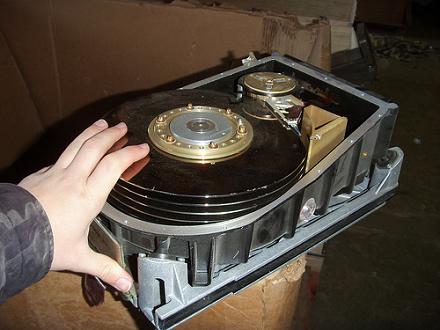
Heh, heh, why store even more programs.
In 1981 I wrote a program on my TRS-80 using the FORTH programming language to interface with the COMEX electronic trading unit in order to obtain up-to-the-second gold, silver and platinum prices for my gold bullion buying business (2). I had a direct data line to the World Trade Center which cost me about $200 per month. Today of course, it costs nothing to get the spot price of gold or any other commodity.
I also subscribed to Reuters which cost about $300.00 per month to get the most recent world headlines that might affect commodity prices. Now it's free.
As I started to write more and more programs that had some actual utility, I began less and less to be so kleptocodiacal as I was.
Today, I am glad to report, that I do not download any software unless I have some definite use for it.
My name is Bernie, and I am a recovering kleptocodiac.
ENDNOTES
(1):
Planck's Constant, The Death of the Yellow Pages
Back in 1971 my brother and I were in the vending machine business, our company was called Intervend. We had over 500 machines in five counties in New Jersey with five trucks all hooked up by radio communications. Boy we could have used cellphones then. We sold everything: sandwiches, soda, cigarettes (45 cents a pack, and when we went to 50 cents everyone swore they would quit), candy, ice cream, coffee, ice cubes, popcorn, you name it. We even had jukeboxes and pool tables. We were in bars, hospitals, factories, diners, and gas stations.
(2):
Planck's Constant, What to do with Employees who Steal
in 1980 I had more than 70 people working for me buying gold and silver jewelry in Maryland, Pennsylvania, Connecticut, New Jersey and New York. I would send teams of 5 workers to Holiday Inns in the various states after posting an ad in the local paper announcing that I would be buying gold, silver, coins and collectibles at the hotel all weekend. Every Monday, all the teams would return from their outings to our main office in Bayonne, New Jersey, with each team averaging about $100,000 worth of gold and silver scrap. The business was making millions of dollars of profit per year.

