
Finding the Perfect Mattress
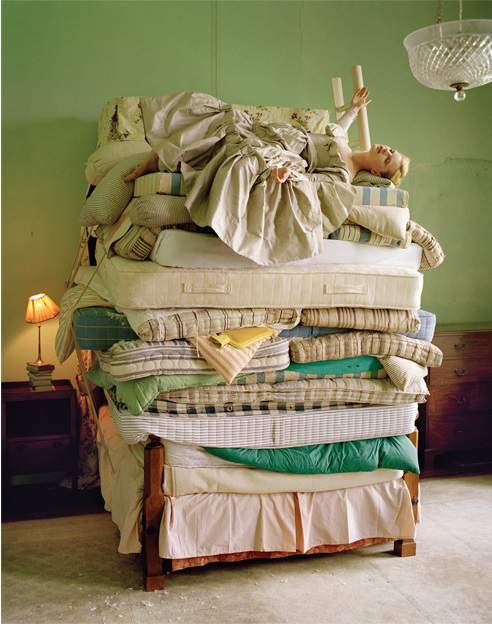
When you're young you can sleep on a bag of rocks and wake up without feeling sore anywhere. But not when you're old. My wife is 66 and I just turned 70, so even a cushion of goose-down can make us toss and turn. Two years ago my son and daughter-in-law bought a new mattress for themselves and gave us their Sleep Number® bed. My wife's not a fan. Yes, I've seen the studies and probably for the majority of people out there it's a great solution to the aches and pains that old age is heir to.
But comfort for my wife is not something that can be simply set with a number, it has more to do with the gestalt of the mattress: the size, shape, the external covering, the internal material, latency (time to return from a bounce), smell, buoyancy (how much you sink into it), firmness (how much you don't sink into it), noise (inner-spring squeaks), and how well it dissipates heat away from your body.
Although price, warranty, cost of delivery, and return policy have nothing to do with comfort, they do have an effect on your wallet which may cause you to lose sleep, negating any benefits of a perfect mattress.
Allow me to digress for a moment. I mentioned that my wife cannot take the smell of some mattresses. Here I mean memory-foam mattresses most of which are made of polyurethane plastic. Interestingly I spent a few years as a chemical technician working specifically in urethane polymer science when the technology was in its infancy in the early 1960s at Baker Castor Oil in Bayonne, New Jersey and memorialized in a number of articles collected here. Because urethane foams take longer to cure than non-foams the product usually arrives with a distinctive toluene diisocyanate odor. That chemical, toluene diisocyanate, is classified as "very toxic" by the European Community. As well, foam products (as opposed to floor and furniture shellacs and coatings) usually come in contact with skin and are usually covered in cloth, so flame-retardant additives are mixed in, some of which are known to be toxic to the liver, thyroid, and nervous system, especially mattresses made before Pentabde, a horrible flame retardant, was phased out in 2004.
I suggest, based on my experience with polyurethane foams, that you not buy or sleep on mattresses that emit a chemical smell.
But back to buying the perfect mattress. When my wife and I travel we make sure to look under the covers at various hotels to see which mattresses gave us a comfortable sleep. The mattresses at Bally's Casino in Atlantic City were particularly comfortable and helped my wife decide on a brand and model to purchase. I won't mention the brand because what's good for us will unlikely be good for any significant number of my readers. Your mileage will certainly vary. The purpose of this article is to offer advice on how to find that perfect mattress for you, dear reader, and not to pimp any particular product.
Overnight testing is key. Never buy a mattress after merely lying on one in a store for only a few minutes. My wife once found a hotel bed that was comfortable for the first few minutes but after an hour was miserably sore. If a salesman asks you if you are ready to buy, tell him you'd like to sleep on it.

